
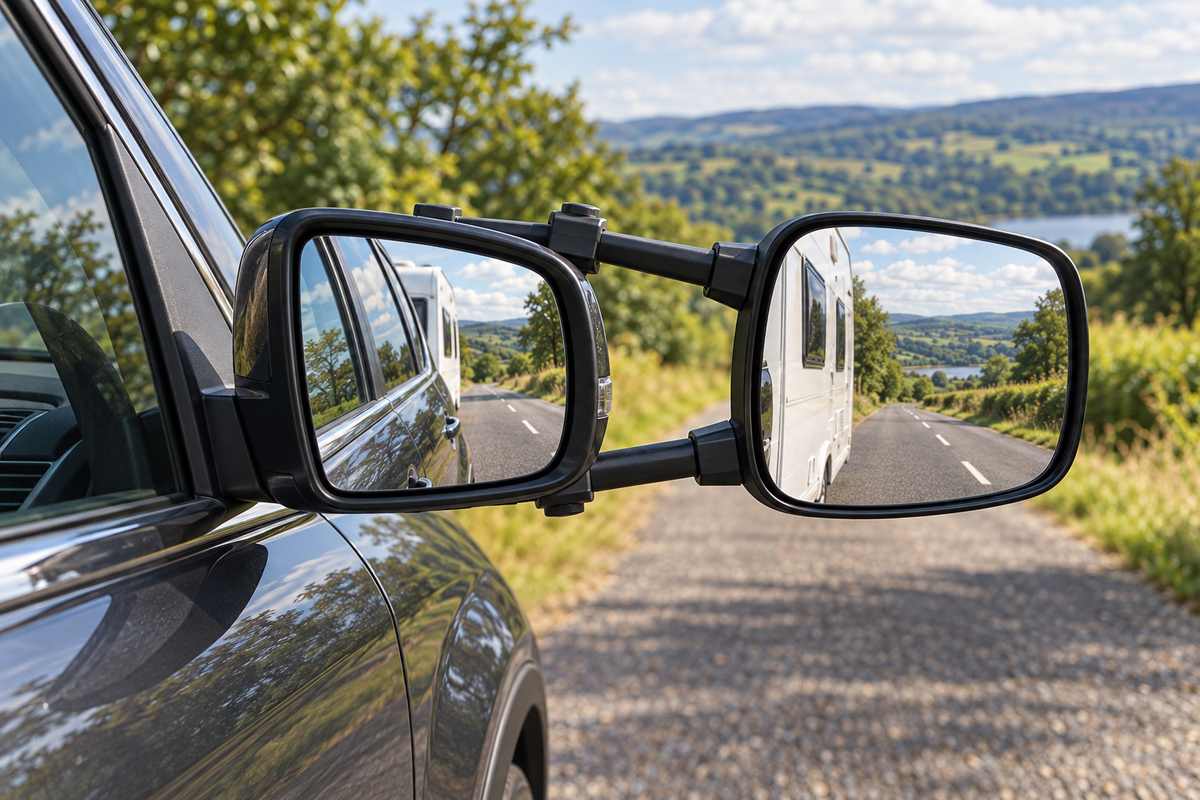
Towing Mirrors and the Law: What Every Caravanner Should Know
As an Amazon Associate & Influencer, we earn from qualifying purchases you might make if you click any of the links or buttons on this page.
Towing a caravan brings freedom and adventure, but it also brings responsibilities, and one that’s often overlooked is the legal requirement around mirrors. Many caravanners don’t realise that towing without adequate rear vision can put them on the wrong side of the law, as well as at greater risk on the road.
Here’s what every caravanner should know about towing mirrors and the law. Note that specific rules can vary, so it’s always worth checking the requirements that apply where you’re travelling.
Why the law cares about mirrors
The reason mirrors matter legally comes down to safety. When you tow something wider than your vehicle, your standard mirrors are blocked by the caravan, leaving you without a proper view of the road behind and beside you.
That blind spot is dangerous, making it hard to see other vehicles, change lanes safely, and be aware of what’s around you. The law exists to ensure drivers maintain adequate rear vision while towing, protecting both you and everyone else on the road.
The general requirement
Broadly speaking, the requirement is that you must have a clear, adequate view of the road behind and to the sides of your vehicle and caravan. If your standard mirrors don’t provide that once the van is hitched, you need towing mirrors to extend your vision.
In practical terms, this means most caravanners towing a van wider than their vehicle will need proper towing mirrors to be compliant. It’s not an optional extra so much as a legal and safety necessity.
Rules can vary
It’s important to understand that the specific rules and details can vary depending on where you are, and requirements aren’t identical everywhere. What’s expected can differ from place to place, so a blanket assumption isn’t wise.
Because caravanning often involves travelling across different areas, it’s worth being aware that the rules where you set off may not be the only ones that apply on your journey. Checking the relevant requirements is a sensible habit.
Choosing compliant mirrors
To meet the requirements, your towing mirrors need to give you a genuinely clear, adequate view, not just tick a box. Whether you choose clip-on mirrors or replacement mirrors, the key is that they actually deliver proper rear vision.
Quality matters here, since cheap, wobbly mirrors that vibrate at speed don’t provide a reliable view and undermine the whole point. Choosing good mirrors that stay stable and clear helps you meet the requirement and tow safely.
Fitting and adjusting them properly
Even compliant mirrors only work if they’re fitted and adjusted correctly. Set them up with the caravan attached so you can see the full length of the van and the road behind and beside it.
Make sure they’re secure and won’t shift or vibrate loose on rough roads, and check them before each trip. Properly adjusted mirrors are what actually deliver the safe, legal view the law is concerned with.
The safety case beyond the law
While staying legal is important, the deeper point is safety. Good towing mirrors dramatically improve your awareness of what’s around you, making merging, changing lanes, and reversing far safer and less stressful.
Even setting the law aside, no sensible caravanner would want to tow without a clear view behind them. The legal requirement really just reflects what’s plainly good practice for safe towing.
Don’t forget to remove clip-ons
If you use clip-on towing mirrors, remember they’re designed for use only while towing. Driving around with them fitted when you’re not towing can be an offence, as they extend beyond what’s needed and can obstruct your normal view.
Getting into the habit of removing or retracting clip-on mirrors once you’ve unhitched keeps you compliant and avoids any issues. It’s a small step that’s easy to overlook.
What’s at stake if you get it wrong
Beyond the safety risks, towing without adequate mirrors can have consequences if you’re pulled over, since it may mean you’re not meeting the legal requirement. It’s simply not worth the risk when the fix is so straightforward.
More importantly, the real cost of inadequate rear vision is the danger it creates on the road. Getting your mirrors sorted protects you from both the legal and the safety downsides, which is why it’s worth doing properly from the start.
Towing with confidence
The bottom line is that adequate rear vision while towing is both a legal requirement and a basic safety essential. For most caravanners, that means fitting proper towing mirrors and setting them up correctly.
Since the specific rules can vary, it’s worth checking the requirements that apply to you and where you’re travelling. Get your mirrors right, and you can tow confidently, safely, and on the right side of the law.

